
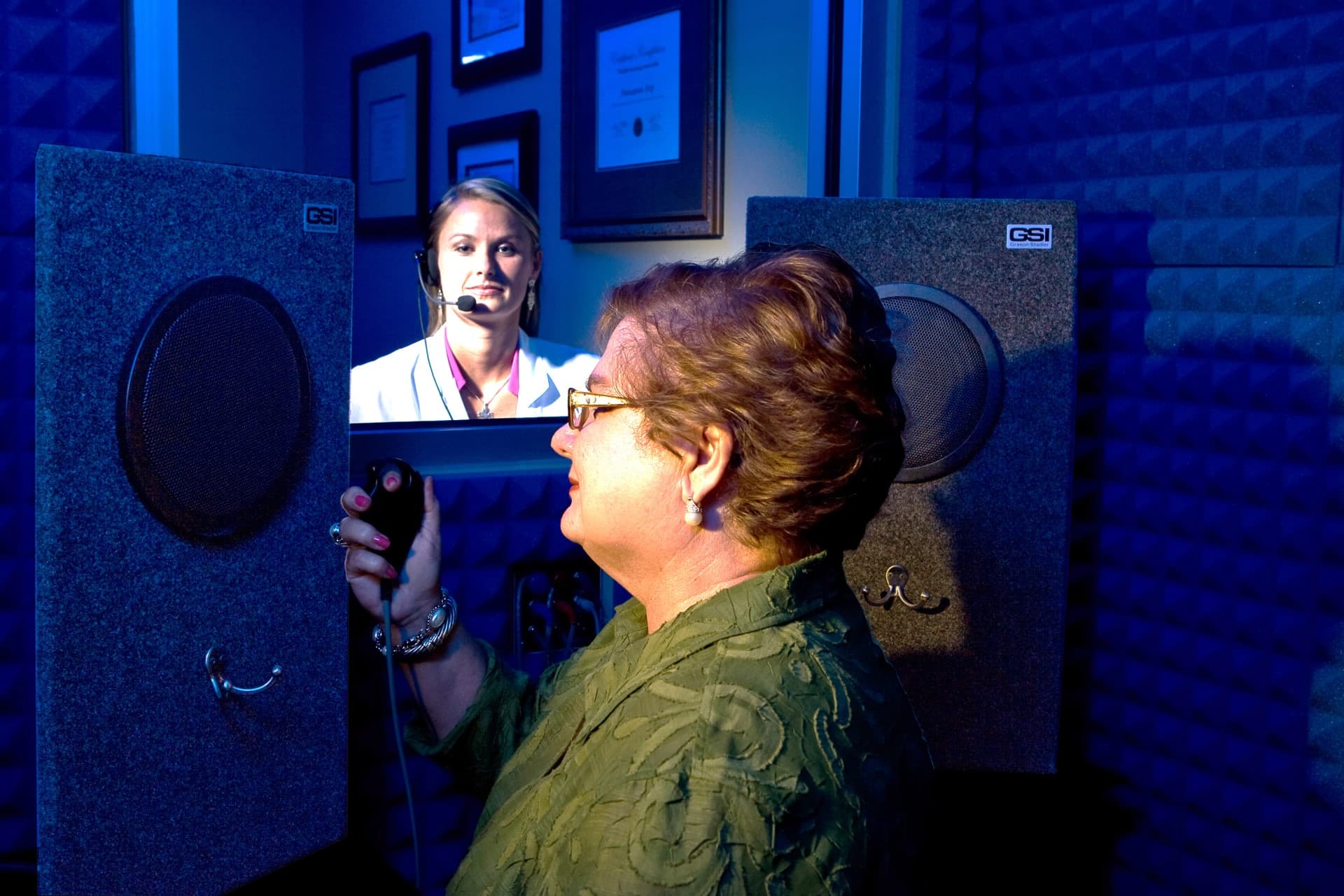
That ringing in your ears?
Tinnitus is treatable. For most people, relief starts with a hearing aid.
If you hear ringing, buzzing, or hissing that no one else can, you are not alone — and you are not stuck with it. Today's hearing aids are the most proven way to quiet tinnitus.
Free hearing evaluations at 115 locations across 6 states.
Ready to hear the quiet?Most people with tinnitus also have hearing loss. Treat the hearing loss, and the ringing often fades into the background. Your first step is simple: a hearing evaluation tells us what's driving your tinnitus — and what will quiet it.
The basics
What is tinnitus?
Tinnitus is the perception of sound when no outside sound is present. It is not a disease — it is a symptom, most often a sign of hearing loss. It is real, only you can hear it, and in the great majority of cases it can be managed.
People describe it as:
- Ringing or whistling
- Buzzing or humming
- Hissing or screeching
- Roaring or static

Common — and closely tied to hearing loss.
Adults 55 and older are about three times more likely to hear tinnitus daily than younger adults.
Where tinnitus comes from.
Almost anything that affects your hearing can also cause tinnitus. The two most common causes are exactly what hearing aids are built to address.
Noise exposure (most common)
Years of loud sound, or one very loud event, can damage the hearing system and trigger tinnitus.
Hearing loss (most common)
When the ears take in less sound, the strain of trying to hear makes tinnitus more noticeable.
Head & neck injury
Whiplash, a blow to the head, or jaw and neck problems are often reported with the onset of tinnitus.
Health conditions
High blood pressure, cardiovascular disease, thyroid issues, and diabetes can all list tinnitus as a symptom.
Medications
Hundreds of medicines, including some antibiotics and pain relievers, can cause tinnitus as a side effect.
Earwax blockage
Something as simple as impacted earwax can bring on tinnitus — and clearing it may resolve the problem.
The proven answer
Will a hearing aid help? For most people, yes.
A single candle looks bright in a dark room. Move it into a well-lit room and you barely notice it. Tinnitus works the same way — it stands out most in quiet, and recedes when your world is full of everyday sound. Hearing aids bring back the everyday sounds you've been missing, which naturally softens how loud the ringing feels.
How hearing aids help
- Fill in the gaps — They restore the sounds hearing loss has taken away, giving your brain more to focus on than the ringing.
- Mask the sound — Amplified background sound covers the tinnitus, lowering how loud and present it feels.
- Ease the strain — Hearing becomes effortless again, reducing the stress and fatigue that make tinnitus worse.
- Built-in sound therapy — Modern devices play customizable relief sounds, tuned by your provider to your specific tinnitus.
What the evidence shows
Results vary by person, and a careful, professional fitting makes a meaningful difference.
Find out if hearing aids can quiet your tinnitus. It starts with a simple hearing evaluation.
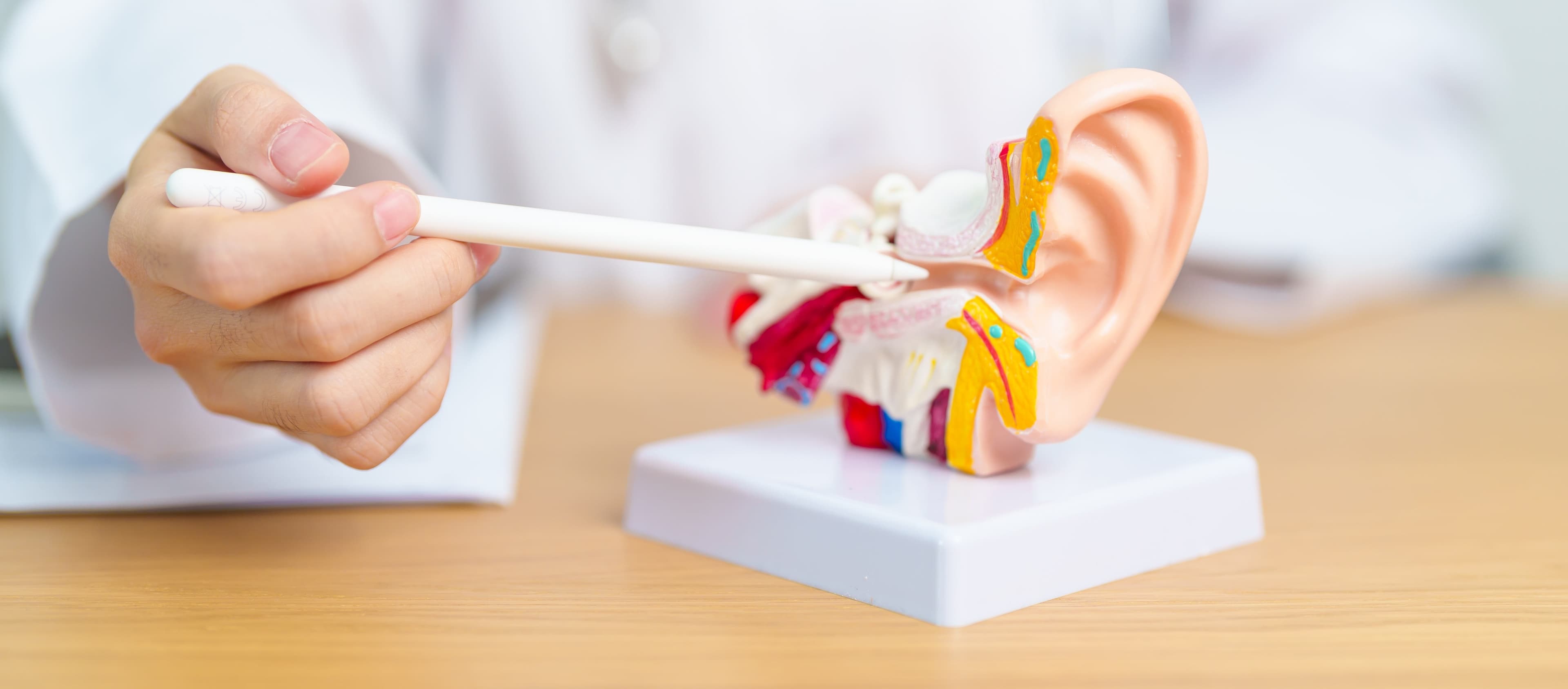
Modern hearing aids — small, discreet, and built for tinnitus.
Today's hearing aids look nothing like the ones you remember, and they come with tinnitus relief technology built right in.
- Tinnitus masking — customizable relief sounds
- Nearly invisible — discreet in-ear designs
- Rechargeable — no fiddling with batteries
- App control — adjust from your phone
- Latest technology — clear, natural sound
The honest truth — and the good news
There is no cure. But there is a first step that works.
No pill or surgery eliminates tinnitus, so be cautious of anything that promises a cure. What does help most people is straightforward: treat the hearing loss behind the tinnitus. A hearing evaluation at Livingston is the logical, effective place to start.
What we add alongside your hearing aids.
Hearing aids do the heavy lifting. We layer these on top to get you the best possible relief.
Sound Therapy.
Soothing sound, built into your hearing aids and tuned to your tinnitus, so it works everywhere you go.
Counseling & Coaching.
Simple, proven techniques that change how you react to tinnitus and reduce the stress it causes.
Sleep & Stress Support.
Guidance on everyday triggers — like poor sleep and stress — that make tinnitus flare.
The Livingston difference.
- Comprehensive hearing evaluation — the essential first step to understand and quiet your tinnitus.
- Latest hearing aid technology — discreet, rechargeable devices with tinnitus relief built in.
- Professional fitting and support — careful fitting is what turns a device into real, lasting relief.
- Ongoing follow-up care — we fine-tune your hearing aids over time to keep them working for you.
- Extended warranty protection — coverage and support that stay with you well beyond your fitting.
115locations across Texas, New Mexico, Arizona, Oklahoma, Utah & Colorado.
Book my evaluation
When to seek care promptly.
Most tinnitus is not dangerous, but a few signs warrant a prompt visit to a physician or ENT. Reach out right away if your tinnitus comes with:
- Sudden hearing loss, or tinnitus in only one ear
- A pulsing sound that keeps time with your heartbeat
- Dizziness, vertigo, or balance problems
- Ear pain, drainage, or pressure
Take the first step
Quiet the ringing. Start with a hearing evaluation.
A comprehensive hearing test is the logical first step toward relief — and toward hearing aids that can turn the volume down on your tinnitus.
866.842.2441Sources
- [1]American Tinnitus Association. Understanding Facts.
- [2]Apple Hearing Study, University of Michigan (2024); BMC Public Health (2026).
- [3]Mass General Brigham / Mass Eye and Ear (2025), tinnitus prevalence by age.
- [4]Mass Eye and Ear, Scientific Reports (2023): auditory nerve loss in individuals with tinnitus.
- [5]Kochkin S, Tyler R, Born J. MarkeTrak VIII: The Prevalence of Tinnitus and Self-reported Efficacy of Various Treatments. Hearing Review (2011).
- [6]Sanders PJ et al. Hearing aids with tinnitus sound support reduce tinnitus severity. Frontiers in Audiology and Otology (2023).